

Hello again! Another week, another Technical Tuesday, and this week, we’re going to be talking about an element of the drivetrain jigsaw that allows us to take the output power from the gearbox and translate it to the wheels; the spool!
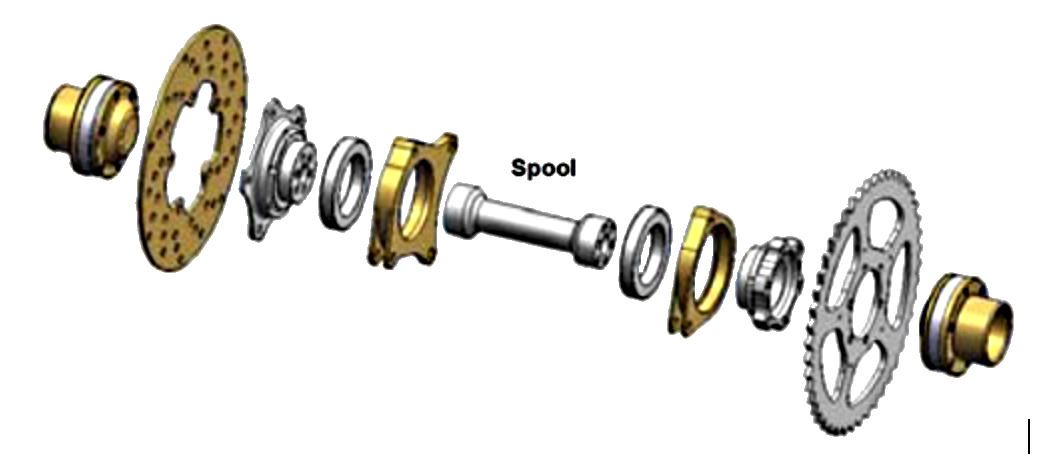
What’s a spool, you might ask? Well, before we can answer that, we need to come to grips with a few ideas first. Power leaves the engine and gear box rotating a shaft, and is transferred through a system of chains or shafts, ultimately to make the rear axle, and thus the rear wheels, receive that power.
The spool is a way of describing one approach to how the axle should be designed, a question that can puzzle even the best engineers. Should the wheels be linked to each other, such that they each turn in lock step, or should they each wheel completely independently?
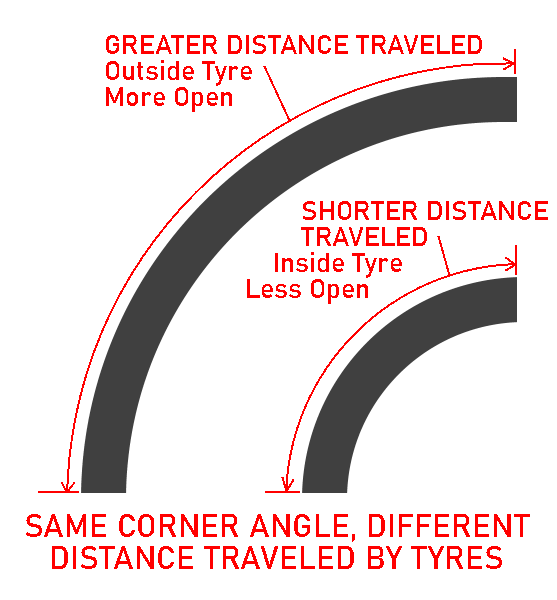 While some propose balance, the spool definitely picks a side, with it prescribing that the axle be a single solid, fixed beam. Of course, having the wheels linked together uncompromisingly sounds to be without issue; power delivered to both of the wheels equally along the same shaft, seems perfect! However trouble arises when you attempt to tackle the big danger faced by a fixed-axle design; the corner.
In a corner, all four of your tyres turn through circles of varying size and radii. The smaller the radius, the more severe the turn, and the less distance you need a wheel to travel the same amount of turning. With a car having an outside and inside wheel, the outside will naturally travel a further distance than the inside to turn through the same corner, because the inside tyre undergoes a much more severe turn. While this is not a problem where the wheels turn independently, a system where wheels are linked such that the inside wheel turns through the same arc as the outside, as would be required in a fixed axle system.
However, differentials that try to find some way to separate the two wheels and allow them to rotate with some degree of independence are a minefield of technical complexity and woe. Designs that utilise these sorts of differential designs require an intricate system of connective gearing that, more than anything else, is incredibly delicate. For a car that needs to complete an endurance event, this must be looked at with great scrutiny. After all, Porsche went into the 1977 Le Mans with a locked differential and only four gears in an era where designers were building some of the most advanced cars they ever had, and yet it was the 935 that pulled away with the win.
 Why? Simple; there was less on the Porsche that could go wrong. It was a straightforward car that could take a gruelling twenty four hour race in its stride without so much as a need for new brakes. It’s all good making the most intricate, brilliantly engineered mechanism in the world, but if it breaks at the first sign of trouble you’ll never turn a lap.
If you want to finish first, first you have to finish.
So, the engineering challenge becomes how to make the more straightforward spool work? It’s a simple solution to how to how to arrange your axle, but it can lead to calamity if done wrong, with the constant threat of unceasing understeer, out into the horizon, never far from sight.
But few, if any, parts are made in isolation. How do you deal with two wheels being locked together and having one scrub off, underrotating against the tarmac as it tries to turn through a corner that it’s going the wrong speed to handle?
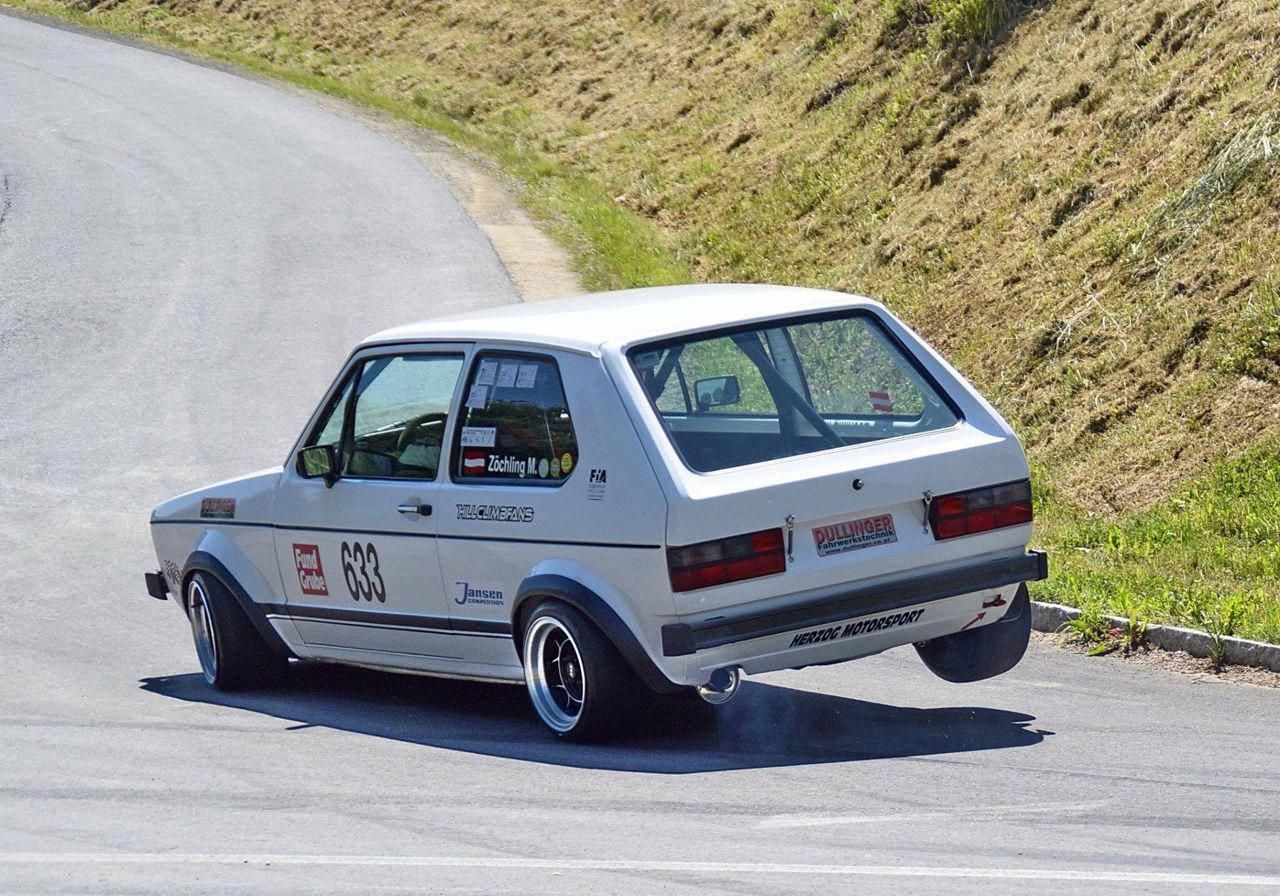 Simple; make sure one of the wheels lifts off the tarmac under lateral load. A wheel can’t drag against the ground because it’s connected to the turning circle of another if it isn’t contacting the ground in the first place. Lateral thinking once again to the rescue.
It’s a trick that is used in historic racing, where the high roll centre allows the rear inside tyre to kick up, like a small dog’s hind leg, and keep the whole system balanced, and keep the rear wheels from turning through the corner at conflicting radii.
Turns out you can teach an old dog new tricks, no?