

Afternoon everyone! Today, we’re going to talk about one of the cooler aspects of our suspension; the pushrod rocker arm!
To understand why this funky little triangle is here, we need to understand the purpose of suspension, and in particular the purpose of the suspension layout we are using, that of push-rods.
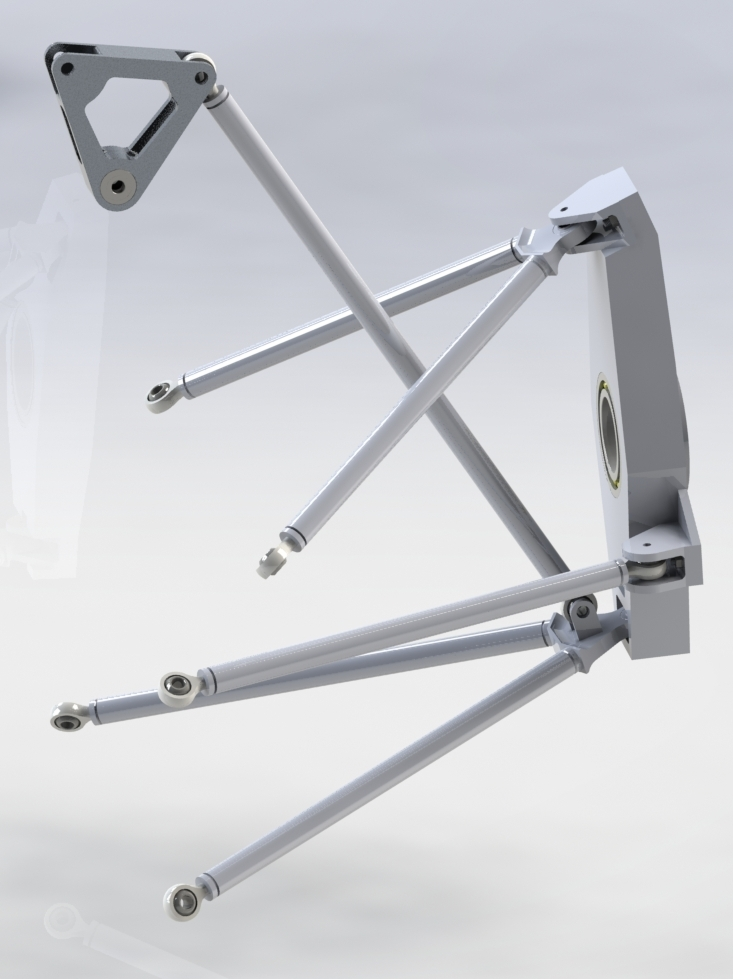 But let’s break things down a bit. When the car rolls along the tarmac, it is ideal that the rubber is in contact with the road, as it’s only when there is that contact that the rubber can give any grip. As much as the pure physicists among us may enjoy to “presume there are no surface imperfections”, this is regrettably not something afforded to a real car.
At the end of the day, the road can be littered with bumps and ruts that can shudder a car and if a cars wheels and axles were wholly rigid and the road surface produced sudden jerks and bounces in the car, this would translate to sudden losses in the contact between the tyres and the road. Cushioning these jolts with the use of springs means that the tyres will have more consistent and reliable contact, and a driver can put more force through them without worrying that they will suddenly be thrown off course with a sudden bump in the road.
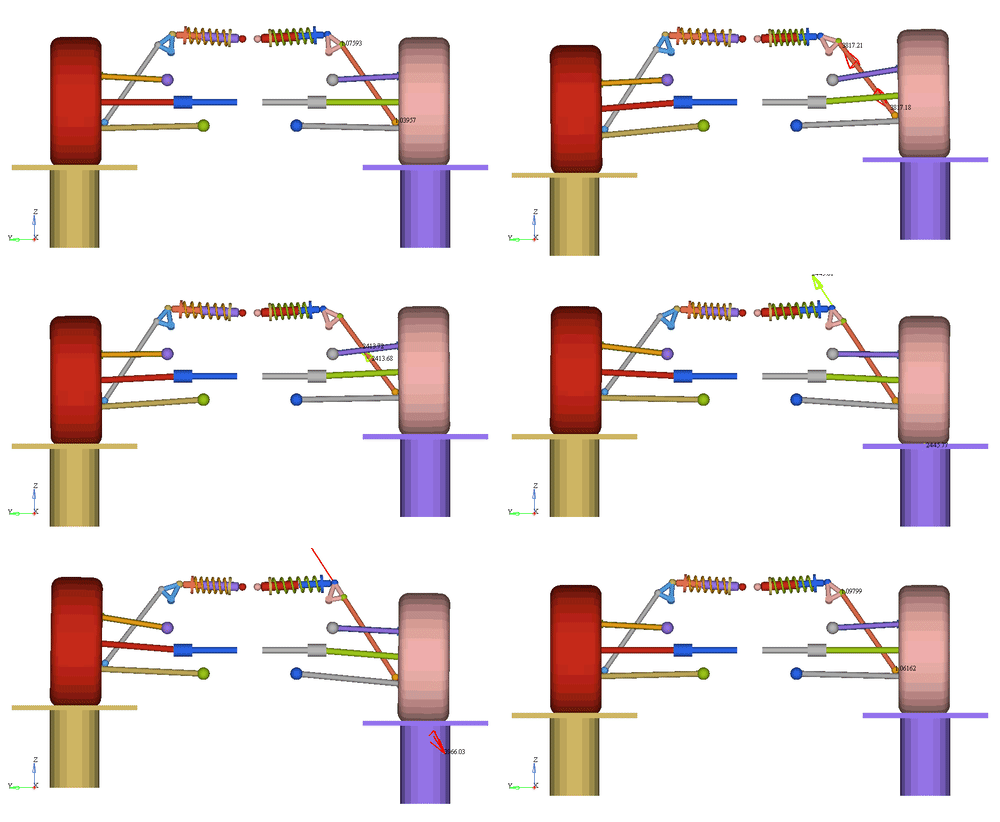 Of course, there is a tradeoff. Adding some cushioning to the link between the tyres and body means the body leans more under extreme lateral load.
Too hard, and grip is unsteady and unreliable with a bumpy surface. Too hard, and the body will roll. As with everything, the question with how soft you make these springs is a compromise.
So where does the rocker come in?
Well, the most obvious solution is to have a single beam running from the wheel to the frame, with a spring being left to bear and dampen the weight of the body pushing down onto the tyres, but there is another way. Rather than just having one beam going straight to the tub, with a spring on that beam, have the beam connect to a triangular pivoting hinge, and in turn have the pivoting end push a second beam in a different direction, with the second beam being the one with the cushioning spring. The triangular pivot, the “rocker”, translates the direction of the force on the wheels coming up into the springs from straight upwards to another direction.
Of course, the question may arise, why do we need this translation? Why not just put the force through the spring in the direction it’s coming out, why do we need to redirect it through the rocker from pushing up to pushing across?
Well, like everything, there’s downsides, but the upsides can be enormous. The arrangement is more complex, and more heavy, however the benefits of being able to better manipulate where your suspension beams go more can be enormous.
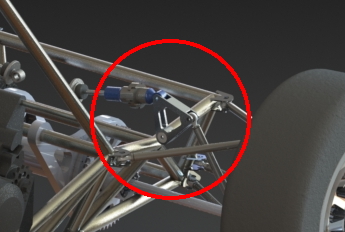 The beams and springs can now be turned in transversely to align with the spine of the car, improving weight distribution, which is essential for us to optimise so that we can score well in the skidpad test.
In addition, since Formula Student prototypes have their wheels protruding out from the body, with the connecting axles and beams exposed to the open air, any components that are mounted to these external beams such as springs would dramatically complicate our aerodynamic profile, and possibly spoil the aerodynamic devices we are hoping to implement for this coming year. As such, using a mechanism to transfer the forces such that they can be cushioned by springs within the body cleans up our air profile dramatically.
So, instead of placing the springs on the beam outside the body, we place it on the inside, and use the pivoting rocker to transfer the force! An elegant solution that relies on simple mechanical principles, the rocker arm is a brilliant mechanism to give us the edge going into the competition!
That’s all for this week, tune in next week for some more insight into some of the cool components that will drive us to success!