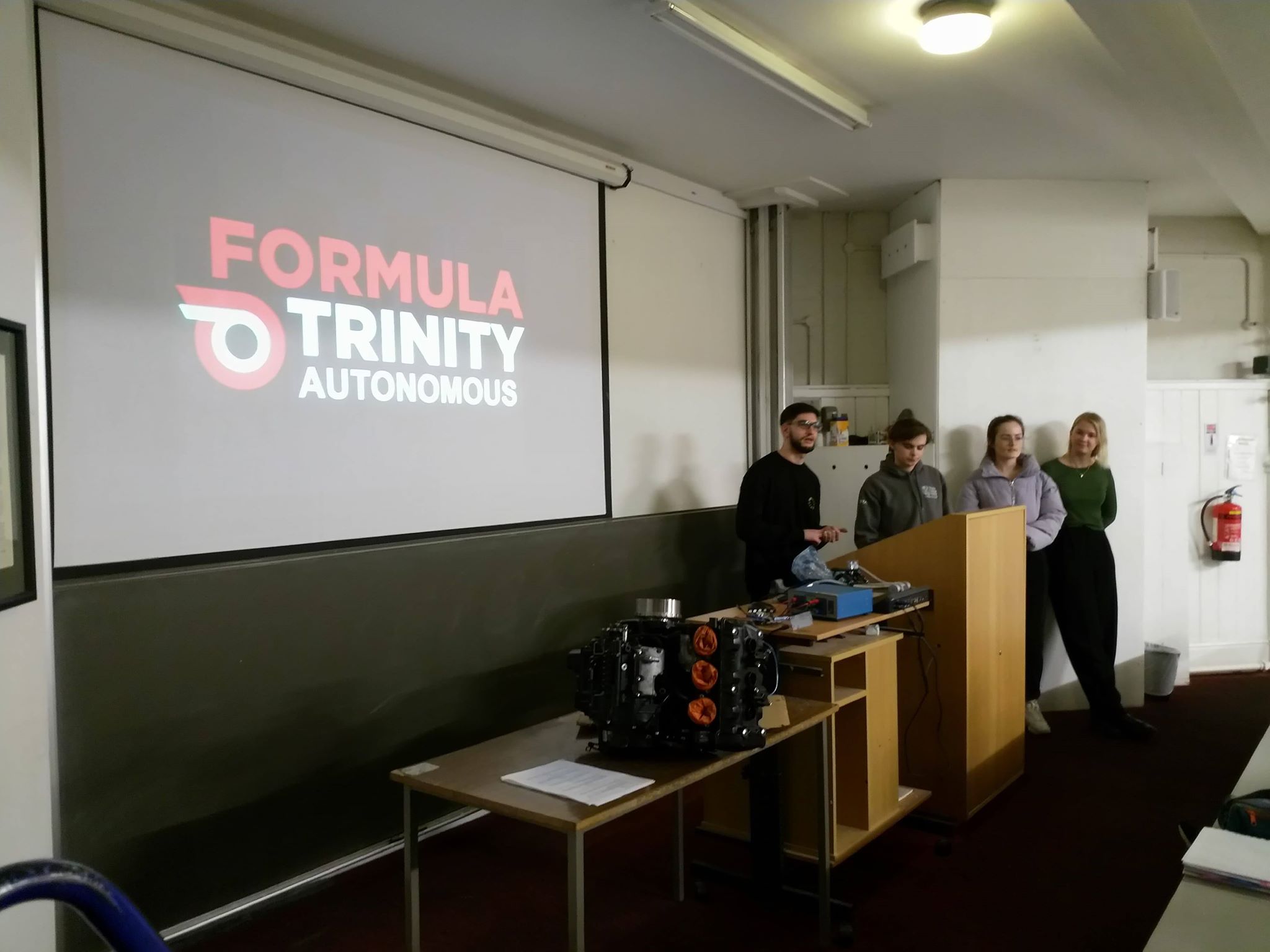

Hello, my name is Vahe Sasunts and I am the head of the Autonomous department. The team is made up of 2 fourth years; Aditya Vishnu and Linnea Olby, 3 third years; Isaac Walker, Arthur Sasunts and myself along with 3 second years; Claire McNamara, Renaldas Sapaitis and Ross McCrann.
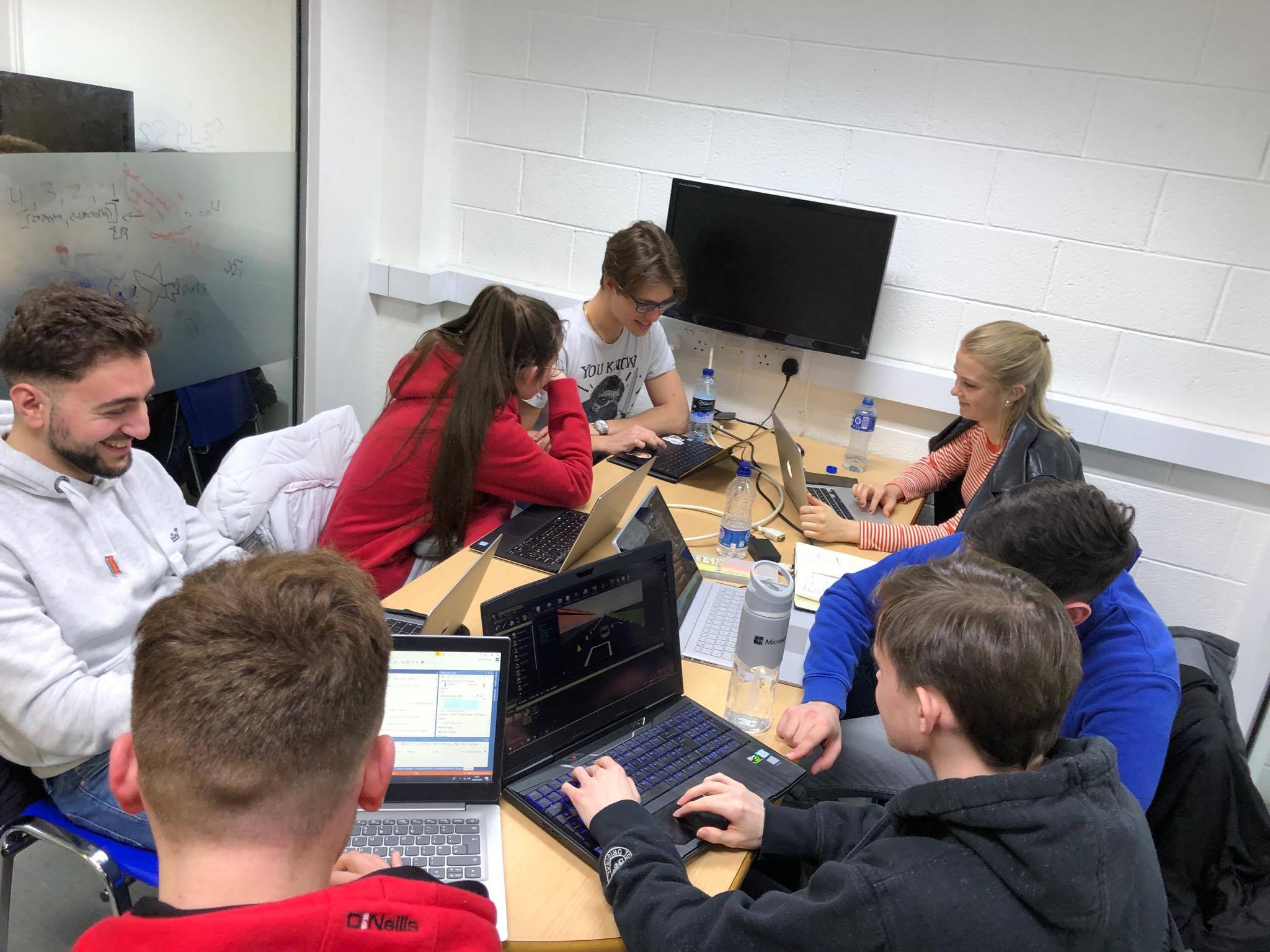
When we first founded the Autonomous department, there was a lot of uncertainties, this was Formula Trinity’s first department where most students were not Engineering students. We come from the School of Computer Science and Statistics and we wanted to leave our mark on the team. Since the creation of a self-driving vehicle is costly and to compete in competitions we needed to buy in a car, I decided to step back and plan a route to achieve this financial milestone to really begin the main project.
The objective is simple, we create a simulation of the real world, the real Silverstone Race track and a 3D modelled car which will steer and make decisions on the fly using sensors such as Lidar and Cameras. We use Unreal Engine to render our simulation and show a graphical example of what our AI is doing, however when creating our program, we created it separately and connected to the Unreal Engine via a network. This means that we have the versatility to swap out our game physics engine for a real car with real sensors.
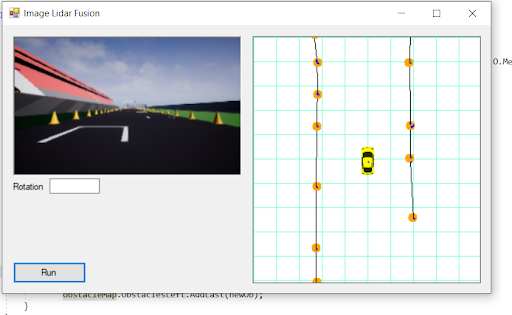
Since we are a team of Computer Science students, we have modules that allow for external projects to be carried out. After organising meetings with lecturers, we secured this self-driving simulation as one of the programming projects and have the ability to do it during our course hours. This has provided us with a much close team who work together most days of the week and communicate as often as possible.
I envision the Autonomous department to grow rapidly, just like modern day technology we evolve and iterate fast. That’s the beauty of software and once we can prove to potential sponsors that we mean business our future will be based on modelling software around hardware and interacting with the real world.
Since staring the project, our team has learned many new technologies, we are developing in around a game physics engine, incorporating technologies such as OpenCV and implementing our own AI algorithm. The learning curve was steep but the team itself provided each member with support during times of uncertainty.
The self-driving simulation project is scheduled to finish on April 12th.