

The Spirit Formula Trinity is a blog series which will focus on the most critical element of Formula Trinity – the students. In today’s blog post for the Spirit of Formula Student we hear from Michael Colwell.
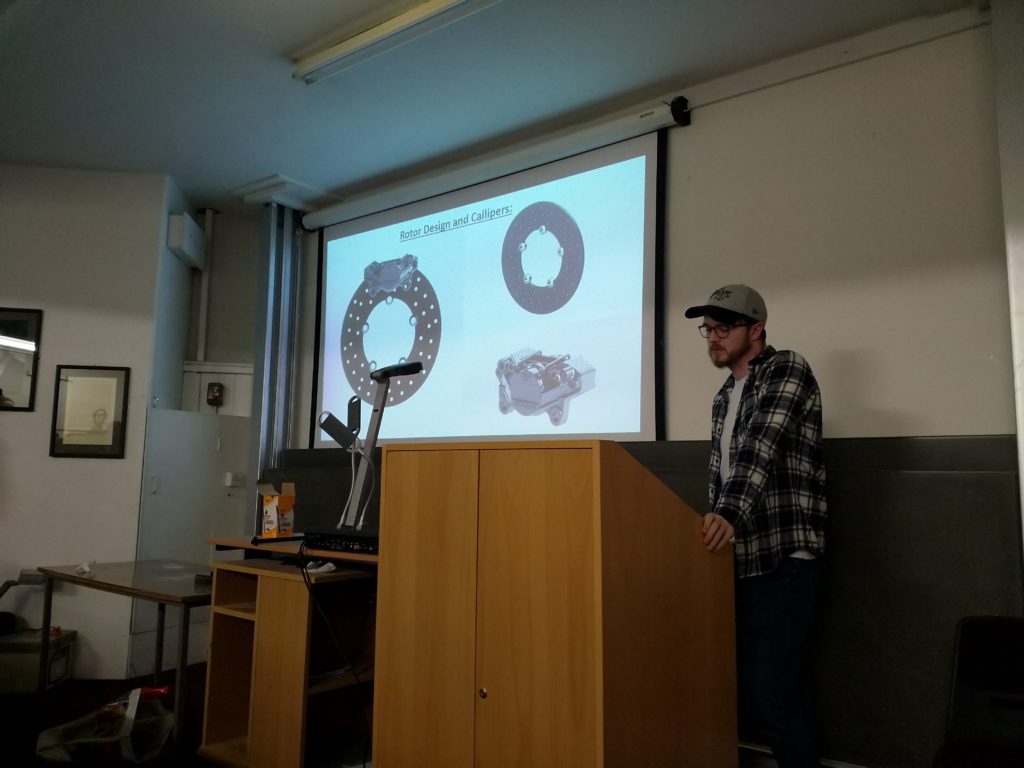
Hello, my name is Michael Colwell, I am the co-lead of the ergonomics department at Formula Trinity alongside Jamie Palmer. Joining a formula student team in college was always an intention of mine and as an almost lifelong motorsport and engineering fan. Within my first few days in the team, joining the ergonomics department and being appointed to working on the braking system I realised just how never ending the rabbit hole of vehicle design truly is.
The ergonomics department takes care of all the items and systems that the driver directly interacts with when driving the car, that’s the steering and braking systems as well as the cockpit and pedal box. These may not be the most glamorous of car components but get these things right and you have some of the foundation blocks in place for a usable, competitive car.
A comfortable and confident driver is worth more in lap time than almost any quantifiable performance aspect of the car. A driver cramping during endurance is going to cost us more performance than an engine with a 20hp deficit. You can have the best tyres on the market but with soft, fading brakes the driver is never going to have the confidence to get the max out of them.
Race cars are things of compromise, a fine-tuned machine that needs to be consistent in radically different conditions and generously accept flawed driver inputs without sacrificing too much performance. A computer optimised setup will almost certainly lead to a vehicle that is too demanding to consistently drive at the limit without mistake. So, making realistic sacrifices for drivability and ensuring a driver is comfortable in their surroundings and confident that the car will react appropriately to their inputs is critical.
Being part of a formula student team requires a lot of research and independent learning, my biggest learning experience came from the FSUK19 competition last year. The second year of competition for Formula Trinity and as a first-year student my first time at FSUK.
Year two for the team provided some interesting challenges, in some aspects there was a solid base foundation of designs and knowledge in the team in other areas there was more work to be done to get to the where we would need to be.
Braking was one of the areas that hadn’t really been touched in dept so was the subject of really all my work and research in my first year. A lot happens in the span of a year and often the challenges faced in a project like this are not just technical, team motivation can come of waves, resources can be limited and the ever pressing exams and lectures can lead to tight schedules for all members, but its commitment and consistent work that leads to the right results.
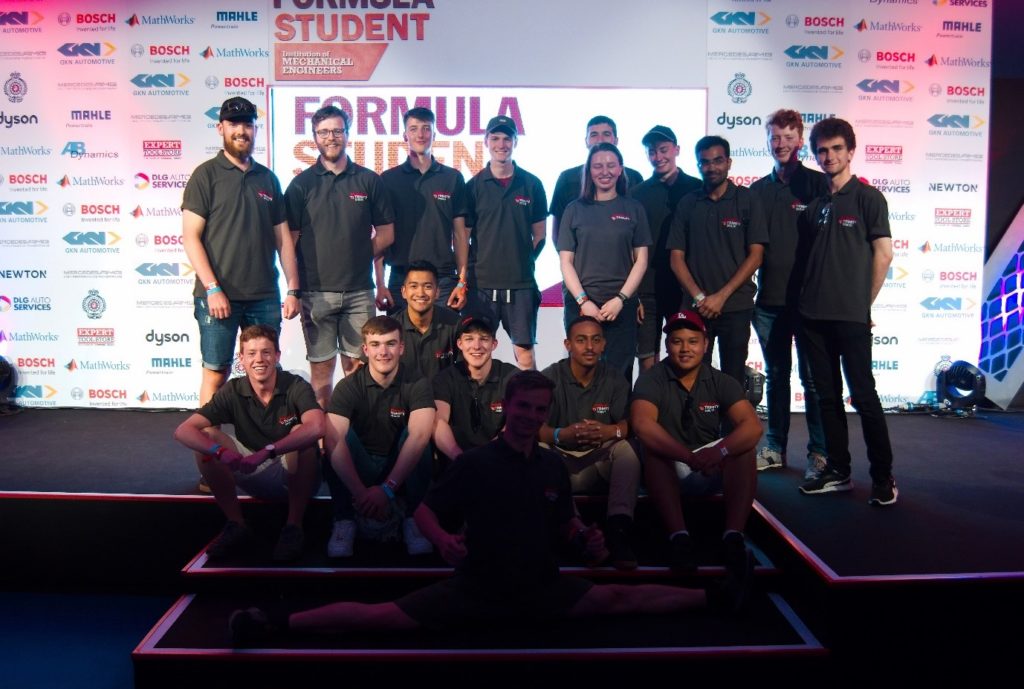
Being a Class 2 team, we only participated in the static presentation events. The scrutiny of the FSUK judges was to be the gauge of quality of our years’ work. At FSUK industry professionals will try pick any holes in logic and pry at any inconsistencies, if you don’t know your stuff there’s no hiding, they know. My experiences in talking to the judges during the engineering design event varied. It started as Jamie and myself entered conversation about the ergonomic dept. This was a relaxed conversation and in hindsight a gentle introduction to Formula Student competition. As our judge was satisfied and the conversation ended. I thought my work was done for this event before abruptly being called to join suspensions pitch where from the onset an Italian judge seemed sceptical about the thought process behind the braking system of the car. Quizzical about every detail in our design no justification seemed to satisfy him, it wasn’t until the results of the event were published that the relief set in. 3rd in engineering design nicely set us up for 2nd overall in Class 2.
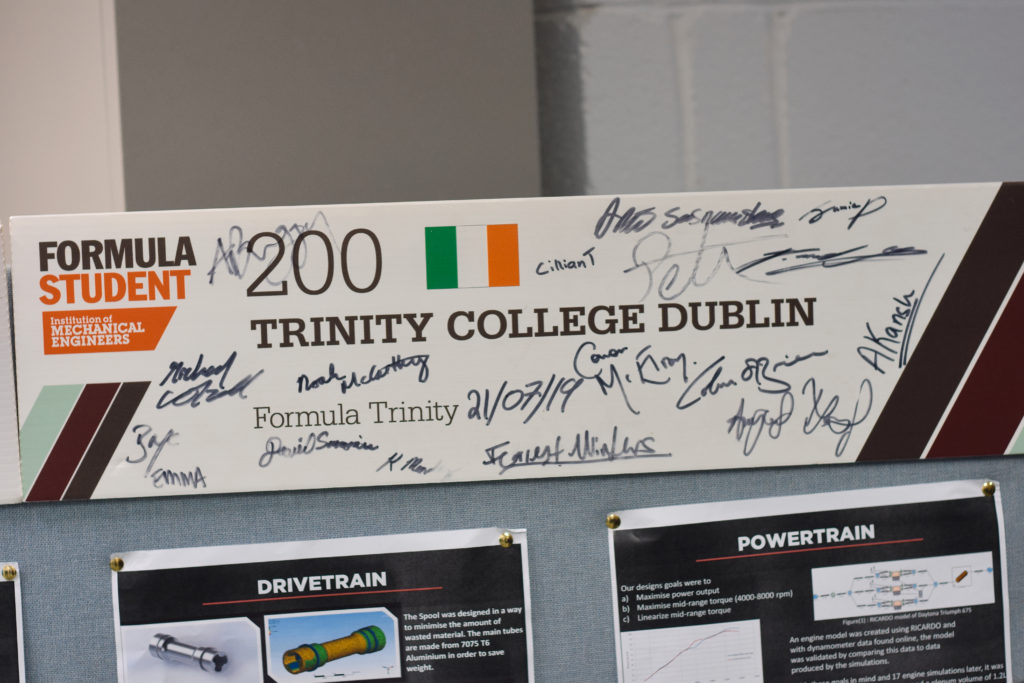
While the daytime at the FSUK competition is very much grounded in education and engineering the trackside campsite is where most teams spend the evenings. One of the highlights of the comp for me was the time we spent in here meeting other teams from around the world that all do the same thing in their free time as us. It’s a sort of festival for nerds as it was described to me shortly before we departed Dublin. Campsite antics have left for some great stories, the near 45-degree incline of some of the tents however might not be one.
Joining a formula student shouldn’t really be taken as a light decision, it should be something that you have a vested interest in. Prior knowledge helps but is not essential, if you are eager to learn and gain more practical engineering experience to compliment the increasingly theoretical engineering modules you are the ideal candidate. Being involved in an extracurricular project as big and long term as this has its ups and downs, motivation will come and go as it does for us all but stick with it and it will be one of the most valuable things you take from your time in university and I cannot recommend it enough.
Being a member of Formula Trinity has been probably been the most educational and rewarding thing in my academic life. Working as a team we’ve, overcome problems made a few missteps and integrated some very smart design and I look forward to seeing the direction the team takes despite how many challenges there might be.