I’m Aaron Hannon and I’m the Steering and Brakes lead in Formula Trinity (FT). I’m a first year engineering student and the youngest department leader in the team, and one of few first years on the team. I’m a lover of science and technology, but most of all I’m a lover of innovation and doing things in new and exciting ways. That’s a huge part of why I’m involved in FT; it’s incredibly challenging yet exciting and interesting to be part of founding something new and innovative in the university.
My previous experience is also part of why I’m involved in the project. I’m a former F1 in Schools World Finalist (Singapore 2015), and part of Williams Martini Racing’s Engineering Academy, which aims to mentor the next generation of F1 engineers. As part of that, it’s been my goal to become heavily involved in Formula Student to gain the necessary experience to work at the pinnacle of engineering that is Formula One.
Steering and Brakes then. We very much do what it says on the tin – we design the steering and braking systems for our car. Easy, right? No, not right.
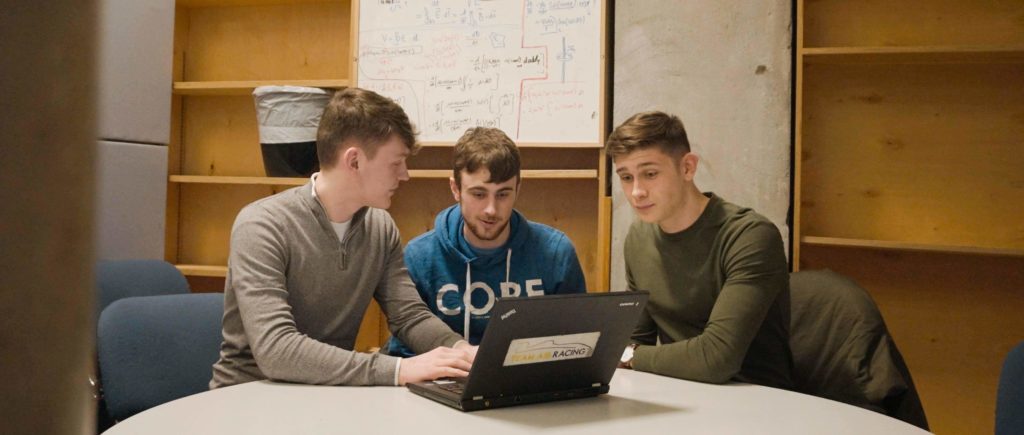
Our department is split into two sub-departments. James and Morgan are taking control of the steering design, with myself, Darren and Will heading up the design of the brakes. Designing these intricate systems without a lot of previous work to build on is a pretty big challenge. Our role is to try and source information and use our mechanics knowledge to calculate the loads our respective systems will encounter, the forces we need to apply, and how to manipulate these forces to create a coherent, responsive and, ultimately, safe system.
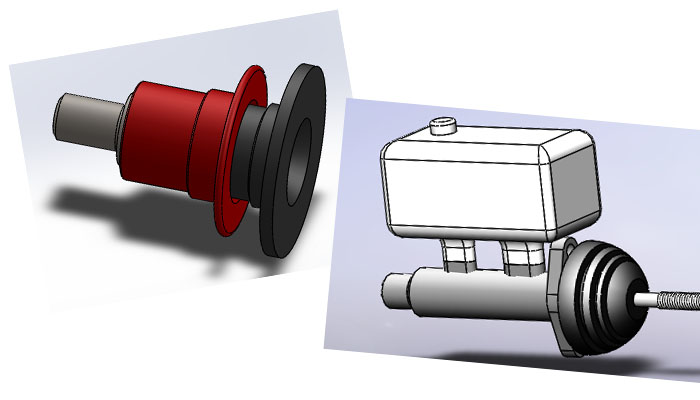
Currently, on the braking side, we’re selecting callipers and master cylinders. Once this is done, we can finalise the loads that the braking system will encounter, and then select a hydraulic fluid and begin to design the calliper mounting. Simultaneously over in the steering end of things, we’re currently evaluating and selecting a steering box, and designing the steering wheel. A lot of our work at the moment is quite numbers based and rigid, but without it done right, the car won’t ever pass the safety tests required to race.
As for what I’ve learned? Well there’s a lot of very technical, nifty things I can point to, but I think the most beneficial thing has actually been time and people management. It’s not easy to organise meetings, keep your progress on track and keep the team progress on track, but it’s a fantastic skill to have if you can master it. I still have a long way to go, but it’s one of the things I feel is really benefiting me.
The one thing that keeps me pushing this project forward more than any other is the feeling of community within the team. There’s a great sense of camaraderie already, and I can’t wait to build on that and achieve the success I know we’re capable of.
For anyone thinking of joining, my advice is just do it. It might be extra work on your plate, and it may feel impossible at times, but if you never test yourself you can never find your limit. Formula Trinity depends on the individual ingenuity of each of its members, and so we need a constant pipeline of driven, creative and enthusiastic engineers to deliver the success we all want to see. That, and if you ask Arnie nicely enough, there’s the odd free pizza too.