

Let’s get down to boiler plate. What is a Formula Student car?
It is a slippery term, and harder t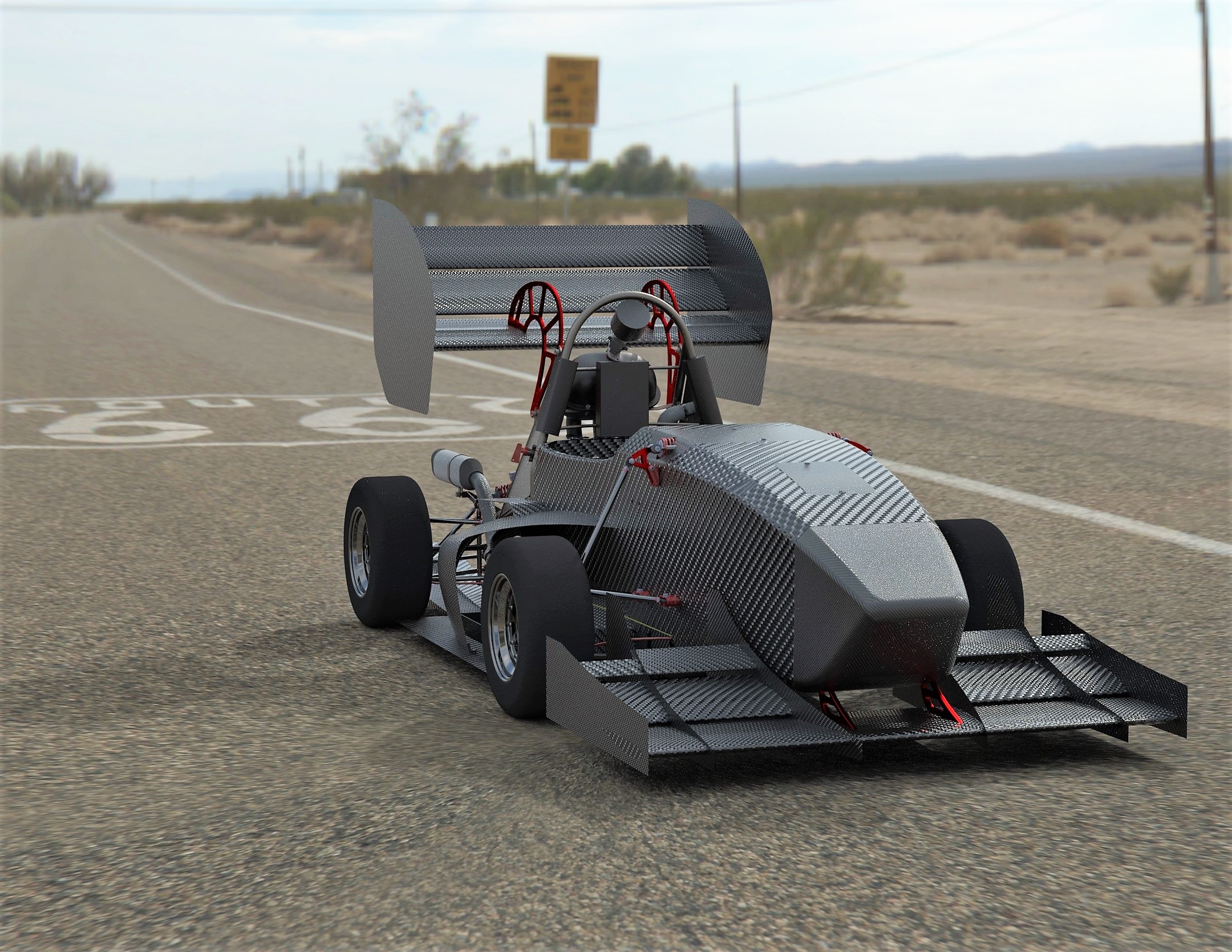 o define than you might think. It is, on the face of it, a racing car, yet it does not enter any races. It is judged as much on its build quality, the rigour of its engineering, and the efficiency with which it was paid for, as its speed. Defining a Formula Student car by its purpose, other than the recursive idea that a Formula Student car is a car designed to compete in the Formula Student competition, is challenging.
We can look to its inspirations. Its progenitor, from 1979, was modelled after the Indy Cars of the day, with an open wheeled, open cockpit, single seater layout, and an engine in the back powering the rear wheels, all meticulously prepared and laden to the nines with the sponsors that made the project financially possible. However the comparison today between a 230 mile per hour weapon firing round the Indianapolis Motor Speedway and an open wheel prototype that might push fifty with a good breeze built by a group of students would seem to display so wide a gulf as to be grossly insulting to both parties.
We can look to its ruleset for a prescriptivist understanding. A Formula Student car is a monocoque, must be powered by either a four stroke engine smaller in capacity than 710 centimeters cubed or an electric motor with a power output not exceeding 80 kilowatts, and must have a length of at least 1.52 meters between the two axels. Also, there must be at least two axles and no more. It must have two braced rollover hoops either side of the pilot whose wall is at least two millimetres in width, with a side impact structure of at least three steel tubes to this same standard. But this doesn’t do the job either. I could rattle off the contents of the whole hundred-and-thirty-three-page rulebook, and I do not feel I would have adequately communicated what a Formula Student car feels like, what it means, what it is.
A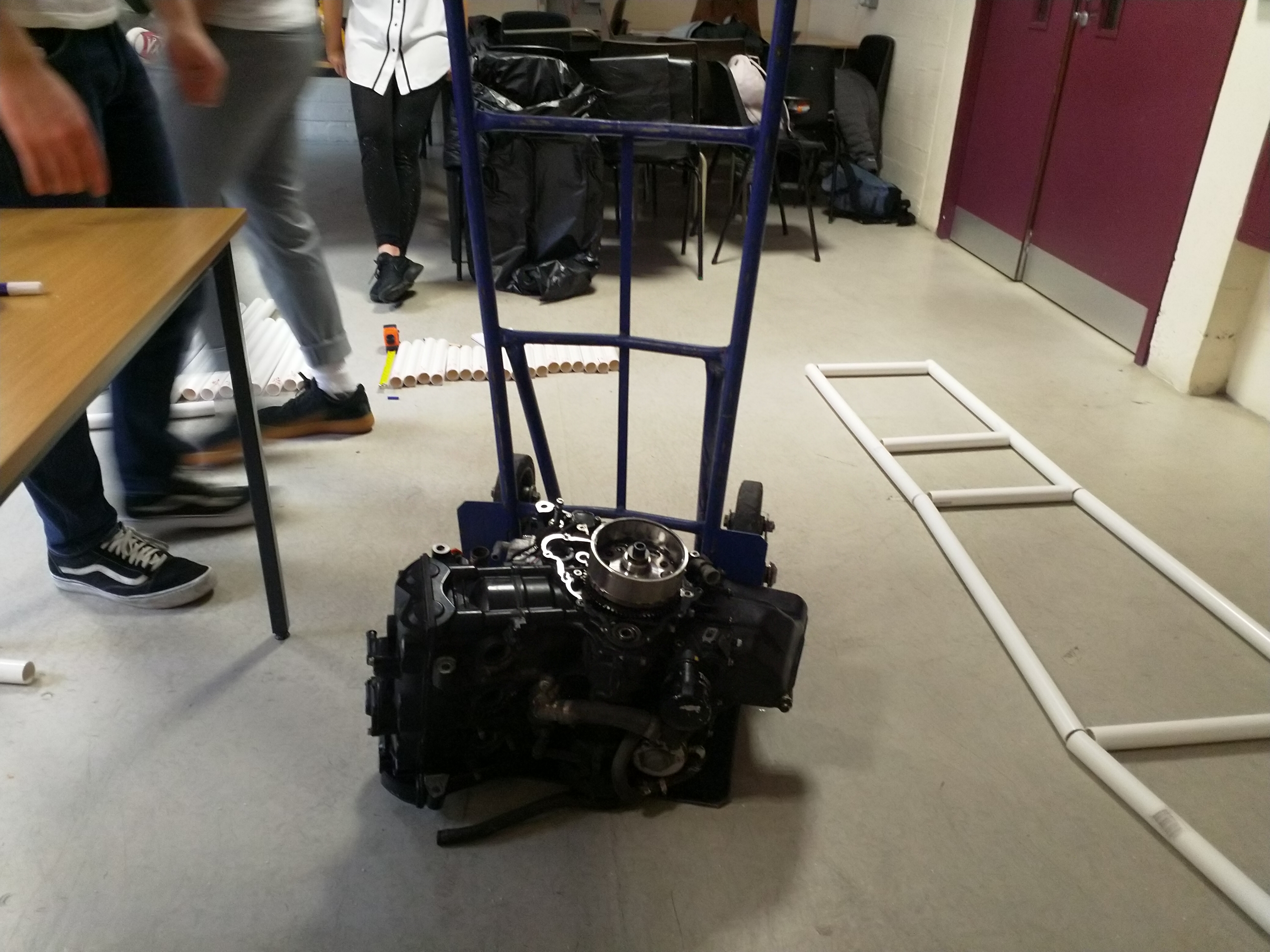 ll of this is to say that a Formula Student car is unique, a car that is as much about the journey as the destination. The fulfilment of a project like Formula Student comes as much in taking a joy in the cars success as its raw performance. Certainly, there is no shortage of satisfaction in sitting down inside it, turning the key, and feeling the tingling frequency in the seat as you dip down the throttle, hearing the snarling bark of the engine as the pistons flurry away, however to focus on this is to, in one way, rob the car of its context.
A Formula Student car is weeks of hand wringing over how exactly to lay out the suspension assembly. It is the feverishly intense discussions over which solution to the chassis weakness that was revealed in the recent ANSYS simulation is best. It is the summation of all the competing interests of the best drivetrain layout, the best suspension layout, the best engine placement, the best chassis, all weighed against the financial interest and practical interest of what is possible. At the end of a frantic year of design and fabrication, you will have produced a unique car that reflects all the compromises that you and your team have had to make over that year, that reflects the best synthesis of what your team prioritised, how it felt it could best balance these. In a way, your Formula Student car is a reflection of you as a team.
It is for this reason why, when it hits the tarmac, there is a real, emotional investment in its success. With a build up of a year of first-principles design, testing, FEA, redesign, compromise, testing, redesign, fabricating, and assembling, of blood, sweat, and tears, late nights and dozens of hours hunched over software, it is impossible to not see the fruit of those labours, the result of those decisions with the opportunity costs that they necessarily imputed, and take a joy in seeing it skate across the road on the balls of its proverbial feet.
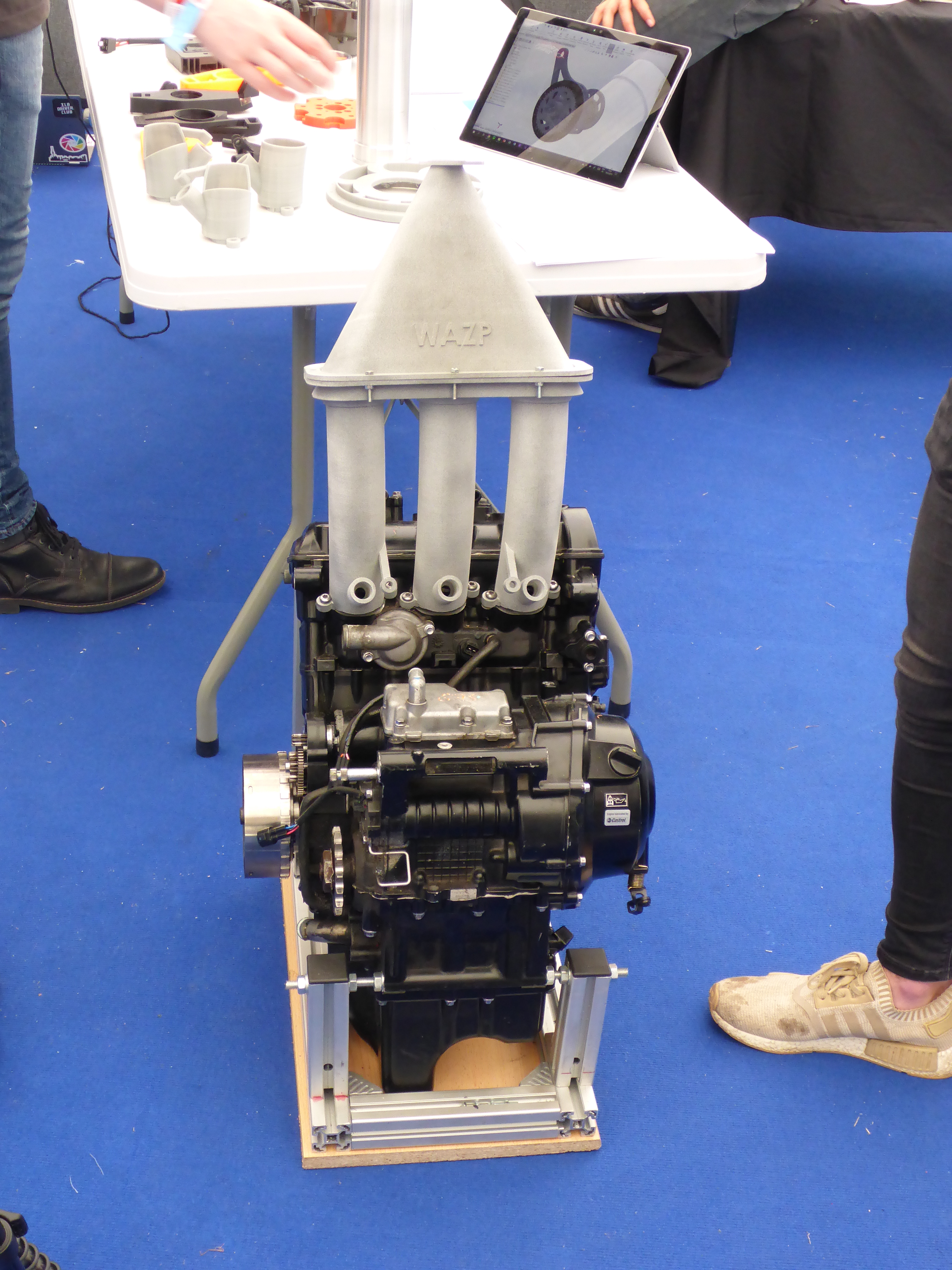 And it skates. While no two Formula Student cars are the same, in the same way that no two Formula Student teams are the same, at their best they can hook around incredibly tight cone pathways, dice into narrow gaps and turn on a cent coin. But how it does this? That’s up to you. You control a vast swathe of the geometry and layout, and find your own solution to any problem. Indeed, much of the engineering skill that is judged in this competition comes down to how you choose to solve a problem, what tradeoffs you are willing to make, and how clever you can be in thinking about the car holistically, such that your solution to provide a car with the agility it needs will likely be radically different to one that I might cook up, with us each having made different compromises.
And that is, ultimately, what a Formula Student car is. It’s a monument to the ingenuity of your team, a testament to the solutions that you have felt worked best for your project, given your resources. And when you see your car being driven in anger in the dynamics test, you will cheer it on like you’ve cheered on nothing before. It’ll be that little piece of you, that bit that you know, in your heart “I’m responsible for that. I helped make that happen, make it what it is.”
So, a warning; you will fall in love with the car. I know, over the last year, I have. And I wouldn’t have it any other way.