

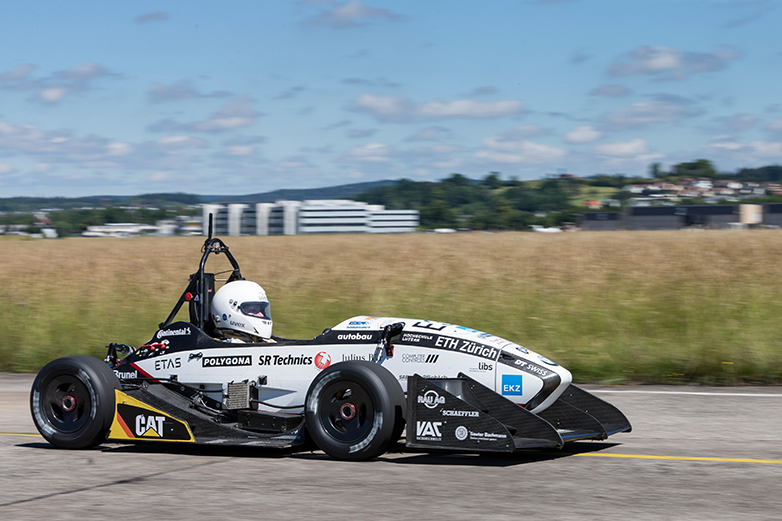
In 2016, a Formula Student car set a land speed record; built by ETH Zurich and the Lucerne University of Applied Sciences and Arts, the electric prototype accelerated from a standing start to a hundred kilometres per hour in 1.513 seconds.
I feel like that bears repeating. 0-100 kilometers per hour in less time than it probably took this web page to fully load.
It took less than thirty meters to accelerate up to the motorway speed limit. in a car designed and built entirely by students for the Formula Student competition, using whatever resources a gang of students could gather in their appeals to sponsors.
Faster than a Formula One car, faster than an the rev range, in conjunction with the light weight and gear ratios designed from scratch to maximise off-the-line acceleration. It is a marvellous feat of engineering, all done by a gang of students in Switzerland. Even though the business of car manufacturers and professional racing engineers is a multimillion Euro business, the standing-start acceleration record isn’t held by Porsche, or Audi, it’s held by a bunch of college students.
Such is the power of Formula Student; with the fresh ideas that comes with a gathering of the finest young engineers, studying the craft, and able to use novel technology like CAD and ANSYS to design and evaluate purpose built parts, using the innovation that got them into these institutions to do those institutions proud. From the gear ratios, suspension, chassis, and all the stuff in between is tailor made to maximise performance in the specific categories with a laser focus. While they are limited in spending to however much they can raise in sponsorship, limitation is often the best thing for creativity, as within the restrictive rules, teams often push to the limits of what is possible.
Within the FSUK competition itself, the record at the acceleration test with a combustion engine, which is measured in speed over a fixed distance rather than distance taken to reach a set speed, stands at 73.25 kilometers per hour, achieved as an average over the seventy-five meter path, set in 2013 by the University of Stuttgart. While it did not get the electric jolt of torque, this time would still humble giants as the car rode up the gears like a pianist sliding their fingers along the keyboard, each one perfectly set up to barely just stay within its limit of traction on the upshift, one after another. All of this takes an incredible amount of analysis and pre-planning, but it is done on a routine basis by teams bearing from universities across the world.
Another achievement of the Formula Student project that puts greater and much more expensive areas of the motoring industry to shame comes at the skidpad. Of interest, or our purposes of examining the extremes of Formula Student, are the G forces. The G forces carried through a corner are one of the most significant measures of how fast a car can tackle a corner, representing the acceleration involved in turning the car in terms of how many multiples of the force of gravity is trying to resist the car’s turn in.
While these figures are not published, the time (t) to complete each circle within the figure eight circuit, with each circle measuring 105 meters in circumference (c) and 18.75 meters in radius (r), is, and from here we can work out the g forces with the formula ((c/t)2/r)/9.8. Using this system, in 2015, ETH Zurich, yup, those ones from the world acceleration record again, carried 3.25g’s through the left turn on the second of the four runs of that test.
For context, the McLaren P1, in a similar 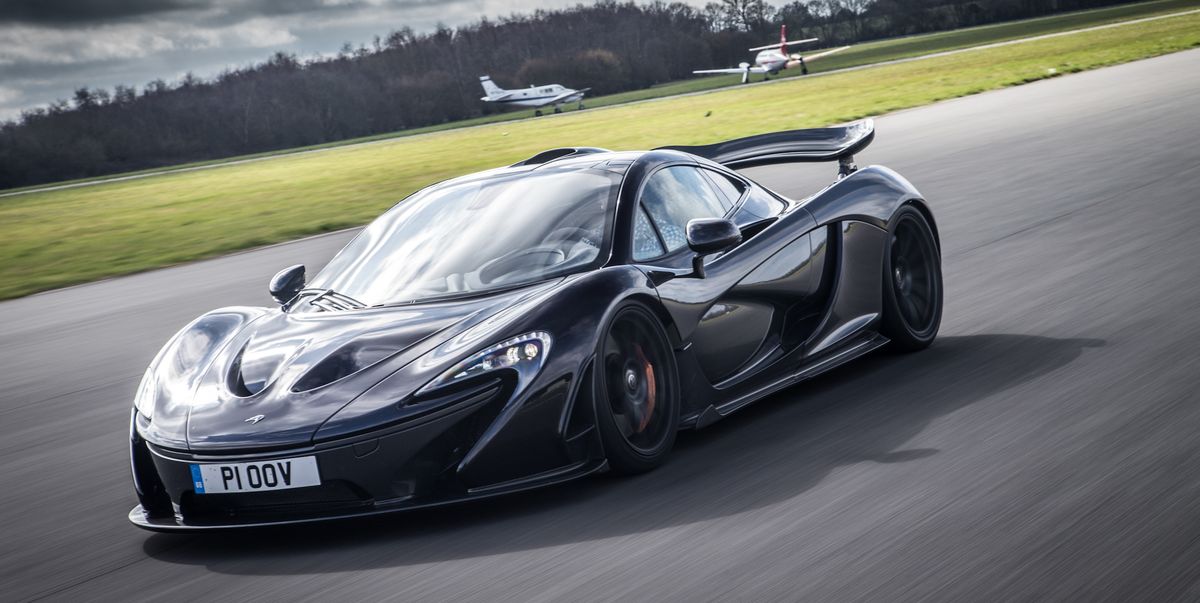 skidpad test, could only muster 2.4g’s of lateral force, and while the Formula Student car does have some assets that are impossible for a road car to share for reasons of practicality (such as weighing a mere 175 kilograms and running on slick, untreaded tyres that are not road legal), it still is a testament to the incredible feats a Formula Student car can accomplish, with all the purpose built components coordinating to provide a planted package.
Formula Student sits on the cutting edge. Some sponsors choose to invest in student run teams to engender brand positivity amongst soon-to-be graduates not out of a straightforward desire to promote their products to a college-going audience, but to have access to a wellspring of fresh talent that, when they put their mind to it, are capable of producing things like a car that can go from 0-100kph in less than two seconds, like a car that can carry 3g through a turn, even when they are left to their own devices and forced to make pitches and acquire funding all on their own initiative.
People with that kind of drive and capacity for lateral thinking are surely an asset to any team. Formula Student deals in the extremes of performance engineering, and with a field as tight as the one on offer, these examples of teams that have flown high and put companies that sink millions into raising international trophies to shame from the comfort of their college’s engineering block offer at once as examples of the possibilities of the Formula Student project in concept and an inspiration to all the Formula Student teams that look on.
Want to compete with people who hold the world acceleration record? Think you can beat them? Well you can prove it. Formula Student allows you to pit your skills in designing and fabricating against them.
And may the best engineer win.