
Formula Student today spans a wide range of rulesets, focusing on the various tiers of resources available to aspiring motorsports teams, who only share the love of the sport and the ambition to compete. Today, there is Grade 2, where a team is judge on their business proposal and digital CAD prototypes, allowing start up teams with little history of design and fabrication to show off their skills at design and business without the need for significant commitment and investment required by Grade 1, where teams build and present a fully realised car, bringing them to dynamic tests to see who has built the best car within the regulations.
Within this, there are further nuances of autonomous cars, electric motors, and in general platforms for students to engage with new technologies and see where their new outlook can take them. The competition has been endorsed by Ross Brown, Bob Bell, Pat Symonds, James Allison, Paddy Lowe and David Brabham. But this vast infrastructure of competitions and classes goes back a long way, starting out as a small regional competition.
I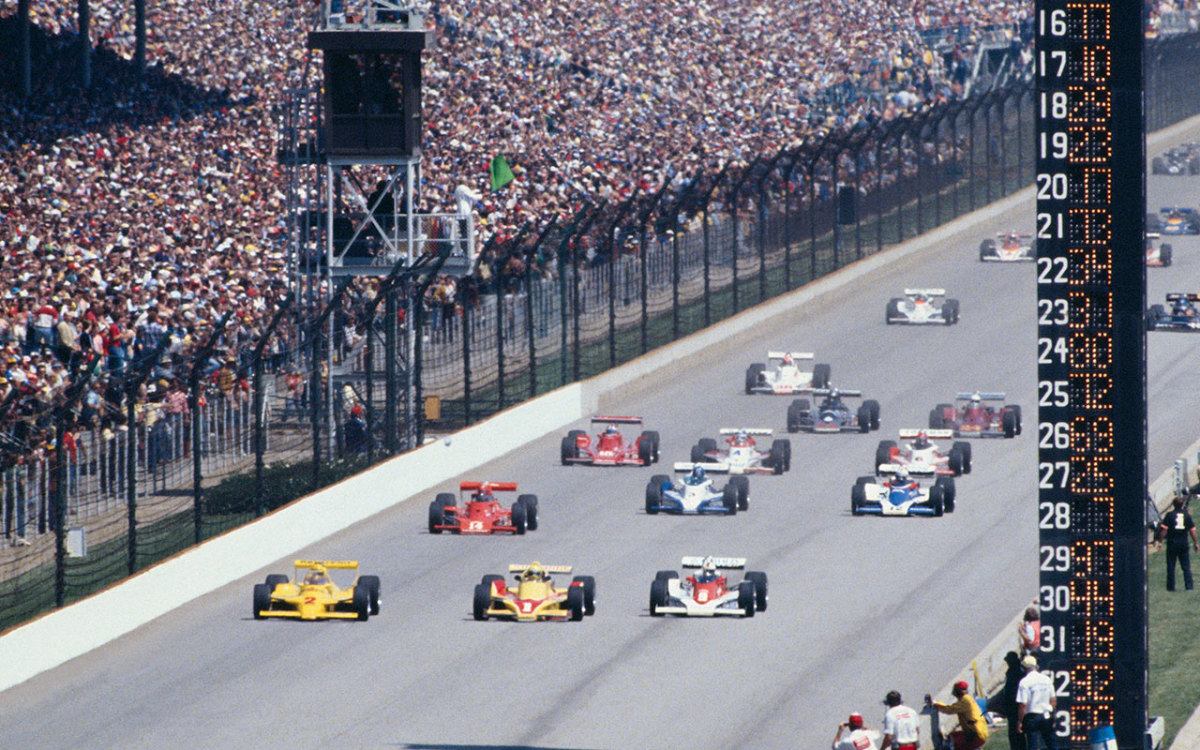 n 1979, the Society of Automotive Engineers hosted a “Mini-Indy” at the University of Houston. The brainchild of Dr Kurt Marshek, the challenge was put out to colleges in the region to design an open wheel racing car in the same vein as the Indy Cars that ran at the Indianapolis 500.
Thirteen schools entered and eleven competed, with all being required to use a five-horsepower Briggs and Stratton engine. The winner was the University of Texas at El Paso.
Although Dr. Shapton of the Michigan Technological University floated the idea of hosting a similar competition for the next year, no one stepped up to organize another Mini-Indy until, after the new year, the new members of the SAE student branch at the University of Texas learned that the will to sanction a second Mini-Indy had died. On their own initiative, they conceived of a new intercollegiate engineering competition that would allow students to apply what they were learning in the classroom to a complex, real-world engineering design problem: design and development of a race car.
With this spur, their Professor Matthews sanctioned the new Formula SAE in the style of Formula A and Formula Vee, but it was emphasised that this new race car was an engineering competition rather than a driver’s competition. Schools would meet after the end of the academic year to compete and determine who had built the best car. Matthews then contacted Bob Sechler of the SAE Educational Relations Department and asked for his permission both to establish the and host the first Formula SAE competition in the summer of 1981, which was granted.
Though Formula SAE (Named after the student branch of the Society of Automotive Engineers that had cooked up the new competition) was inspired by Mini-Indy, it shared very few of the first competitions technical regulations. The Formula SAE rules left the selection of the engine up to the design team, within specified limits.
The very first FSAE competition was hosted in the parking lot of the University of Texas’ baseball field on Memorial Day weekend, and it went without a hitch. The event expanded beyond the borders of the United States in 1982 with an entry from Universidad La Salle from Mexico City.
However, while entries continued to expand from outside the US, especially from Mexico, FSAE continued to be the primary student engineering competition of this nature, primarily run out of the southern United States. It had not broken out yet.
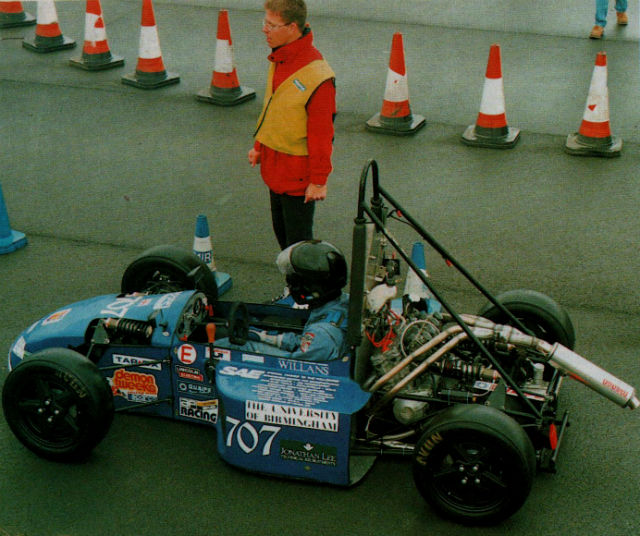 This changed in 1998, when three US cars and four cars from UK universities that had made the voyage west to compete ran a demonstration event at the Motor Industry Research Association proving ground, in Warwickshire. In this display of the power of student engineers, the University of Texas at Arlington were the overall winners, with University of Birmingham being the best of the UK teams.
While it was only an exhibition event, the UK caught Formula SAE fever, and since then, sanctioned by the Institute of Mechanical Engineers in association with the SAE, the annual “Formula Student” competition has been held attracting entries from across Europe. Today, there are teams of young engineers in Italy, Japan and even Brazil competing in the UK competition, born out of the events of 1998. The first formal competition designed to run at the UK in 1999 was won by the Rochester Institute of Technology from New York. Even when the competition branched out of America, the legacy of American success did not.
This expansion was just the beginning, as not long after, a third “Formula SEA Australasia” competition, hosted in Australia, was added, and today there are over a dozen more competitions operating under iMeche/SEA sanction. Indeed, these competitions are today conducted under largely similar technical and sporting regulations, allowing teams to participate in several different competitions with little or no modifications to their work.
But every race needs a track. The 1998 exhibition event was held at the MIRA proving ground, however following that the now annual FSUK competition was held at the National Exhibition Centre in Birmingham between 1999 and 2001. For 2002, the event was moved to the Go-Kart track at Bruntingthorpe Aerodrome, before settling at the home of British motorsports, Silverstone International Circuit, in 2007, where it has remained until this day.
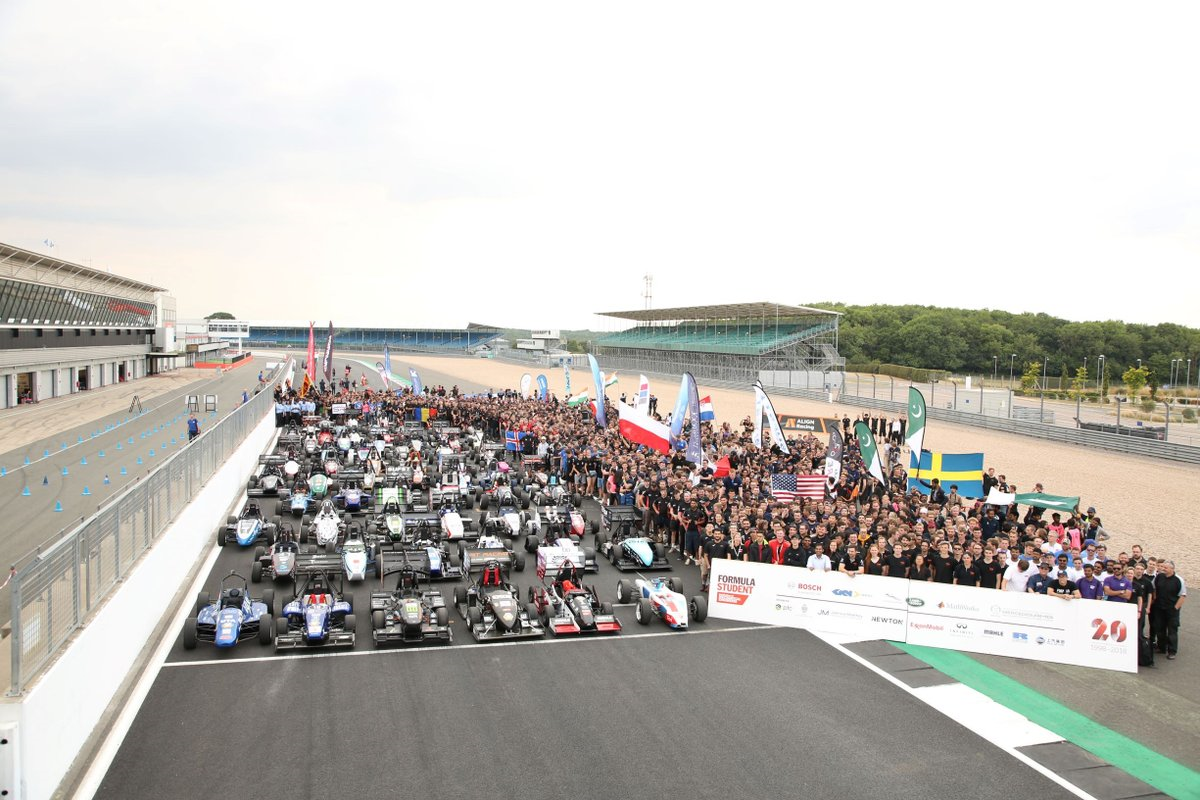 Naturally, the tests do not involve the use of the full Grand Prix layout, which for a Formula Student car may as well be an ocean of tarmac. Rather, the dynamic events have taken place on a coned off area between Copse and Woodcote. In the time at Silverstone, the competition has flourished.
For example, in 2019 entrants from 71 different universities all around the globe competed in Class One alone.
In 2020, the yearly dynamic event had to be cancelled in light of the Coronavirus pandemic and the competition moved online. Under this new regime, the University of Bath won the Virtual Static Events, with the University of Surrey winning the Virtual Dynamics Events and the Oxford Brookes University winning the FS-AI competition for the first time. The competition aims to return in its usual live format for 2021.
To date, the University of Stuttgart has won four separate times, the most of any institution, with the University of Toronto winning three in total, the second most lauded University in the competitions history. In total, fourteen different Universities have won, from nine different countries. The United States and Germany have as countries been the most successful, with five titles apiece across their three and two winners respectively.