

There’s no getting around it; CNC machines are expensive, whether to buy outright or to rent out. Cutting blocks to tolerances of less than a dozen microns based on lines of g-code directing the spindle in and out is challenging work, so the expense is perhaps understandable, however it frequently deters start-up fabricators from investing in big new machines that can be so large as to occupy an entire room. For Formula Student teams, accessing these facilities can be more than a little taxing on limited financial resources, however Formula Trinity are not the only people in the Wicklow-Dublin area interested in getting a CNC machine up, running, and making parts.
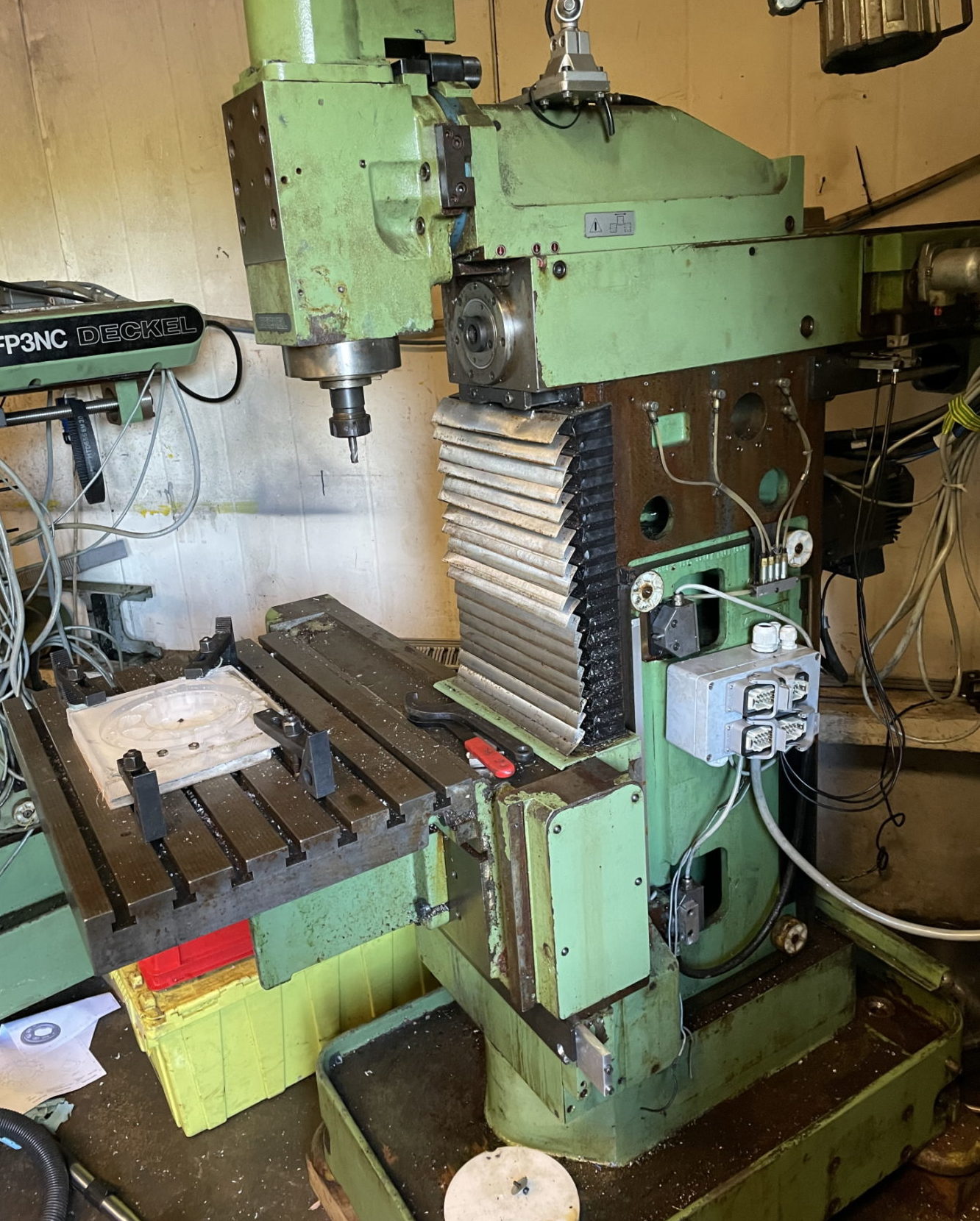 Following a contractee becoming insolvent, Conor Cooke was remunerated for services rendered, with a lack of available funds, with a collection of milling machines and lathes, however the crown jewel of the collection was a pair of Deckel FP3 CNC machines with a bed of 400mm by 200mm. However, there was a catch. Ordinarily, a ready to run Deckel FP3, even in spite of them being made in the late 1970’s, would be far in excess of what he was owed.
Furthermore, with it being in such high demand, a functioning FP3 would have sold like hot cakes and raised enough funds to satisfy debtors. However, these two machines in question had months earlier been stripped of all of their electrical control units, encoders, and wiring. Functionally, it was a slab of steel shaped like a milling machine. Since that day years ago, it has sat by, always another project to get onto at some point when there was some free time, and there was a need for it.
And in the pandemic, there has been little else but time.
With the promise of some technical aid, as well as a justification for the resurrection of the project, attention could finally be directed at restoring this ancient Deckel, and potentially having a usable CNC machine that could be operated effectively in-house at far below the normal cost. Fortunately, of all the machines that one could be tasked with restoring, one could do worse than to have an old Deckel. Have you ever wondered why old German machinery and vehicles are reputed as being unbreakable? Where did the reputation of German reliability arise? Well wonder no more, as this Deckel is a perfect example of the principle.
In a time before planned obsolescence, wherein machines like cars and phones would be made with a view to having a limited service life so as to ensure replacement sales, many German Gesellschaft mit beschränkter Haftung prided themselves on making machines that were more mechanically sound than the largely Anglo-American competition. While the model of maximising repeat sales would eventually result in this reputation being somewhat discarded, 1979 was the height of insane German engineering. As such, it was quickly apparent that the beasts were mechanically sweet as a nut, however we had barely gotten started.
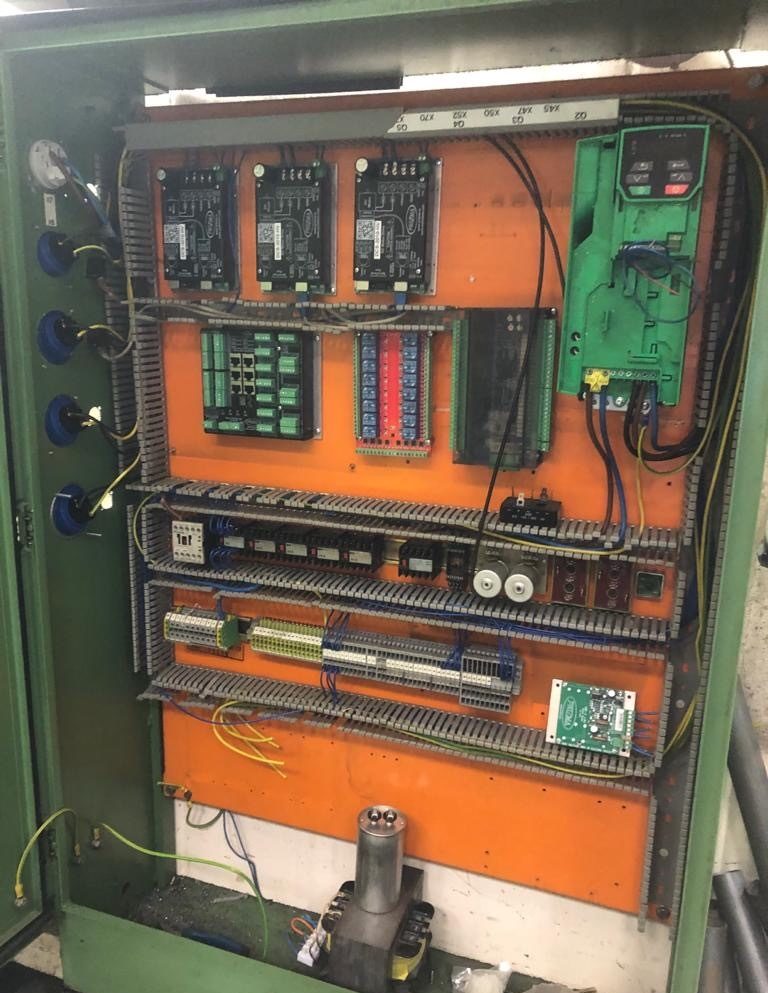 One of the immediate problems was the lack of wiring. While we did have the casings for the encoders, to all of our knowledge of electronics and wiring it was nothing more than a big box with ten rows of screw terminals. Working out how the various ports interpreted different pulses in voltage, and how they had to be arranged to make the spindle dance to a tune of our liking, required that we retrace the steps of those engineers that had designed and built the box almost half a century ago.
Only by doing so could we then try and replicate their processes and rebuild the machine. With neither of us having any education in electrical engineering, with Conor’s knowledge lying in the mechanical field and mine rarely having had cause to enter into any engineering field, we placed significant reliance on Formula Trinity’s electronics team.
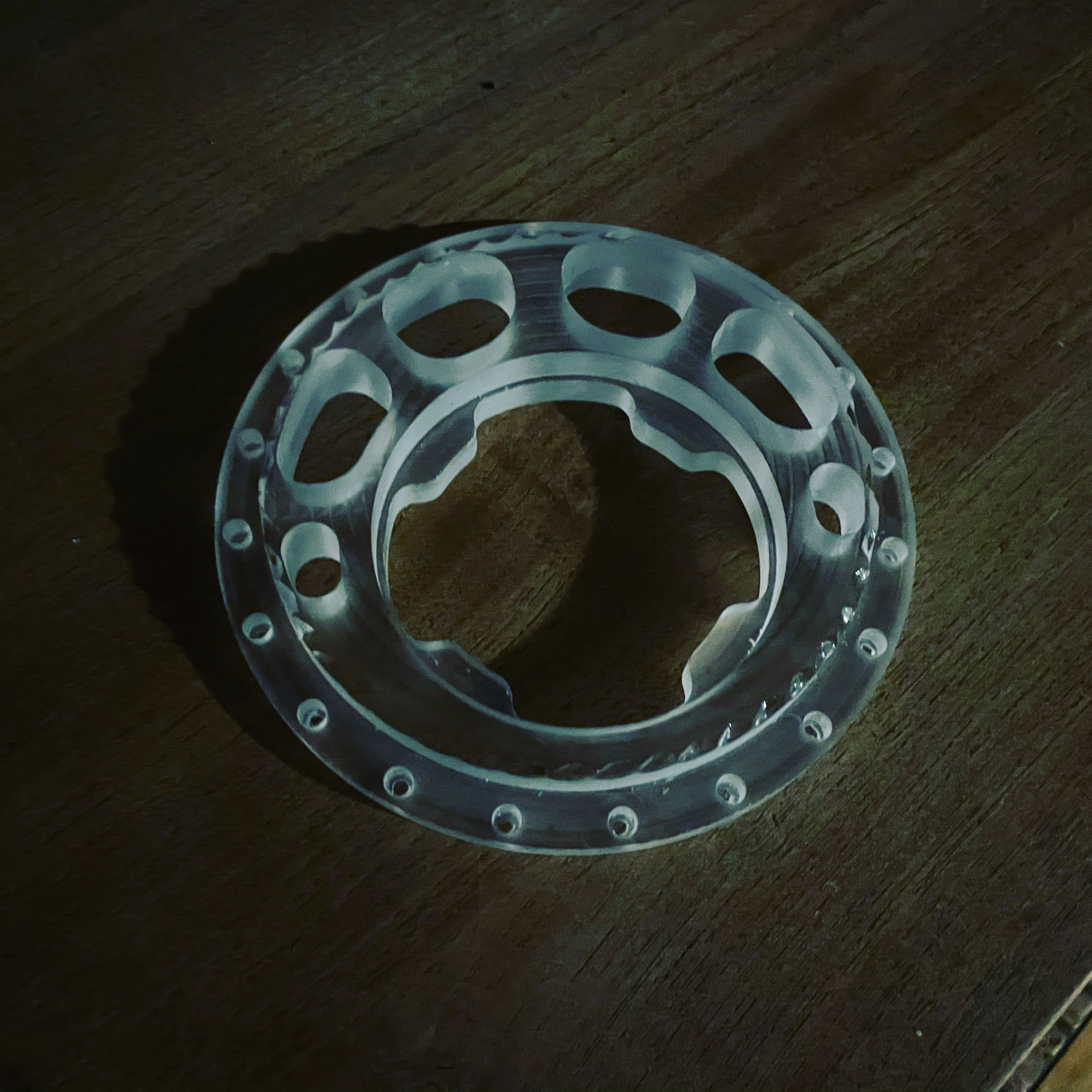 The carbide drill operates well enough for Formula Trinity’s needs, ploughing through aluminium and steel with ease, however there are still some secrets that those German engineers hid in this machine all those years ago that we are yet to extract. Even as it cuts like a blade through butter, we are operating at only a third of the machines potential.
In a time before the sorts of advanced electronic motors we see today where huge amounts of power can be delivered through the range of a single gear, CNC machines would manage their power escalation through a gearbox operated by a primitive programmable logic controller that would translate the request for power though a series of switches that would place the machine in a certain gear and speed it up to a certain speed so as best to achieve the desired power output. Fortunately, this is one area where we can take advantage of advances in technology, as today PLC’s can be mapped using ladder logic, which will hopefully allow us to put the finishing touches on a restoration that, to our knowledge, has never been successfully completed before.
However, even before that, right now we’re more than happy to bring her home on one gear, and bring Formula Trinity’s dream designs into reality.